
Choosing a preschool or kindergarten in Northern Virginia? Learn what to look for—teachers, ratios, routines, and the early experiences that shape confident learners.
What to look for when choosing a Preschool or Kindergarten in Northern Virginia
For many families, preschool or kindergarten feels like a simple “first step.” A sweet milestone. A place to learn letters, make friends, and get used to a routine.
But your child’s first school experience is doing something much bigger than teaching early academics.
It’s shaping how your child feels about learning.
And that one shift, whether school feels safe, joyful, and confidence-building… or stressful, confusing, and overwhelming, can echo for years.
If you’re currently touring schools and want help knowing what to look for, we put together a parent-friendly Guide to Kindergarten with the exact questions to ask (and what great answers sound like).
Download Our Free Guide to Kindergarten.
The first school years don’t just teach skills; they set the tone
In early childhood, children are forming rapid beliefs about themselves and the world around them. Preschool and Kindergarten aren’t simply preparation for “real school.” For a young child, this is real school.
Here’s what those first experiences quietly teach:
- “Am I safe here?”
- “Do adults notice me and understand me?”
- “Am I capable?”
- “Do I belong?”
Then the answers are positive, children tend to take healthy risks, persist through challenges, and engage socially. When the answers are negative, children may become hesitant, anxious, or resistant even if they’re bright and capable.
Confidence is one of the biggest “curriculum outcomes” in early education
A strong early program builds academic readiness, yes but it also builds something even more important:
A child who believes they can learn.
That belief often comes from small daily moments:
- A teacher noticing a child’s effort, not just their correctness
- A classroom routine that feels predictable and calm
- A child being guided through conflict instead of punished for it
- A quiet child being invited in, not overlooked
- A curious child being encouraged, not shut down
Over time, these moments add up to confidence and confident learners tend to thrive.
Why “good enough” can be costly (even when a school looks fine on paper)
Many schools can say they’re warm and nurturing. Many can show you a cute art wall and a nice playground.
But early childhood classrooms can feel very different once your child is actually living in them every day.
A few common issues families don’t always spot right away: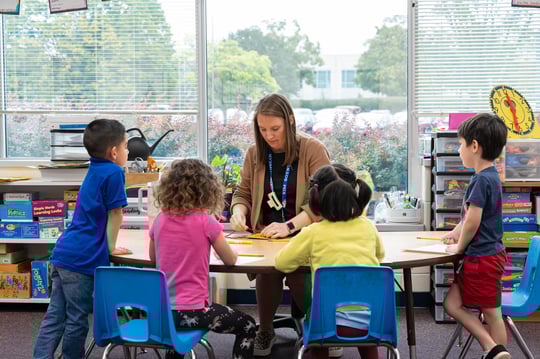
- Classrooms that are busy but not calm
- Teachers who are kind but stretched too thin
- Environments that are structured but not responsive
- Academics that are either too light or too intense
- Behavior management that relies on shame, stickers, or constant correction
Young children absorb the atmosphere. They feel whether a classroom is steady or whether it’s survival mode.
This is exactly why we recommend going into tours with a short “lens” — what to listen for, what to observe, and what to ask.
Our Guide to Kindergarten includes a simple tour checklist and questions that help you compare schools clearly (without overthinking it).
Download Our Free Guide to Kindergarten.
What to look for in a Preschool or Kindergarten
If you’re touring schools right now, you’re likely seeing beautiful spaces and hearing impressive promises. Here are the things that matter most beneath the surface.
1) Warm, capable teachers who truly know children
More than fancy programs or brand-new materials, the teacher is the experience.
Look for teachers who:
- get down at a child’s eye level
- speak calmly and clearly
- redirect behavior without embarrassment
- seem to genuinely enjoy children
- know what each child needs to be successful
A great early teacher isn’t just “nice.” They’re skilled and they’re steady.
2) Low ratios and strong supervision
In early childhood, safety and attention aren’t luxuries, they’re the foundation.
Ask: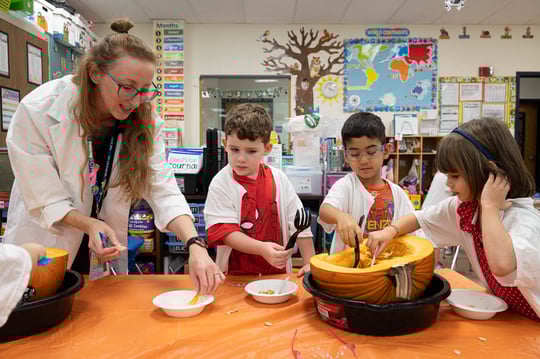
- How many children are in the room?
- How many adults are consistently present?
- Is support reliable, or does it change throughout the day?
The question isn’t just “How many students?” it’s “How much individual attention can my child actually get?”
3) A classroom that feels calm, not chaotic
You can often feel this within five minutes of walking in.
Signs of a calm classroom:
- children know what’s expected
- transitions are guided (not shouted)
- the teacher’s voice is steady
- students seem engaged, not frantic
- materials are accessible, but not overstimulating
A peaceful classroom helps children regulate and regulated children learn more.
4) Purposeful play (not “just play” and not “no play”)
Play is how young children learn. But in a strong program, play isn’t random, it’s intentionally designed to build skills.
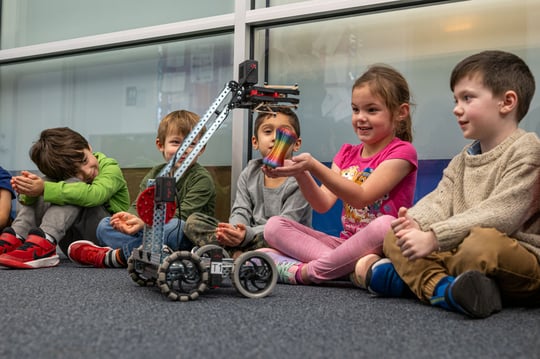 Look for:
- storytelling and pretend play (language + social development)
- building and puzzles (problem-solving)
- sensory play (fine motor + regulation)
- group activities that teach listening and turn-taking
- opportunities for movement throughout the day
A great question to ask: “What skills are you building through play?”
5) A school that teaches social skills instead of expecting them
Preschool and Kindergarten students are still learning:
- how to share space and materials
- how to handle disappointment
- how to ask for help
- how to solve small conflicts
- how to take turns speaking
You want a school that teaches these skills, not one that labels kids as “good” or “difficult” based on how naturally they behave in a group.
Ask: “How do teachers respond when a child is upset, impulsive, or struggling socially?”
6) Strong communication with parents
You shouldn’t have to guess what’s happening during your child’s day.
Look for:
- clear onboarding and expectations
- consistent updates (not only when there’s a problem)
- thoughtful conferences and teacher access
- a school that welcomes partnership
The best early education feels like a team, not a black box.
7) A smooth path forward
Even if you’re choosing Preschool now, you’re also choosing what comes next.
Ask:
- How do you prepare children for the next grade?
- What does readiness look like here?
- How do you support different learning speeds?
- Is there stability in the faculty and leadership?
A strong start should lead into a strong next step without families feeling like they need to “fix gaps” later.
Download Our Guide to Kindergarten
Touring preschools or kindergartens in Northern Virginia? Our free Guide to Kindergarten includes the questions to ask, what to look for, and a simple checklist to help you compare schools with confidence.
Created by the experienced educators at The Nysmith School, one of Northern Virginia’s leading private schools, this guide reflects decades of working with young learners and preparing them for lifelong academic success.