
This is one of the questions I hear most frequently, and there are several important reasons why we designed our foreign language program this way. 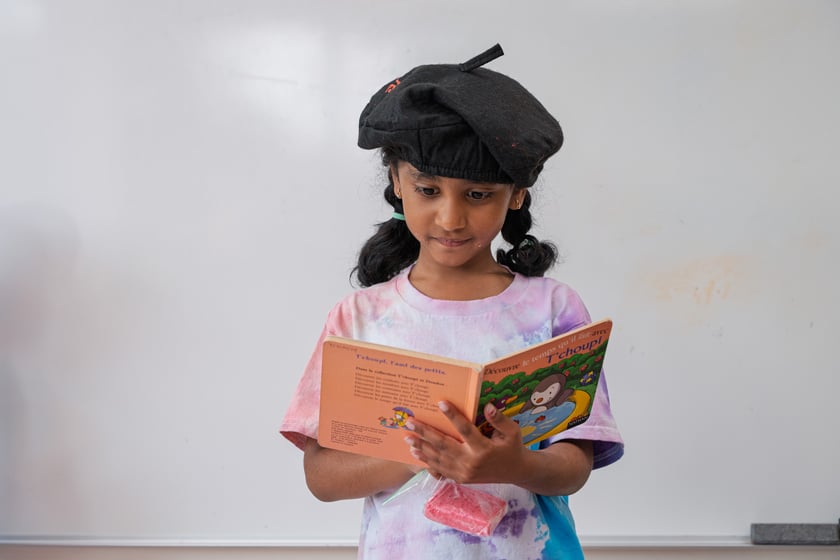
Over the years, families have asked me many thoughtful questions about why we do certain things at Nysmith. I am the first to say that we are always open to change. In fact, we feel strongly that we must continually reevaluate every aspect of our program. Education should never remain unchanged simply because something has always been done a particular way.
 French Begins in the Beginners Program
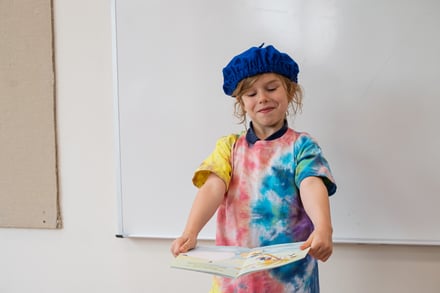
We begin teaching French for 30 minutes each day in our Beginners Program. Introducing a second language at an early age helps children develop listening skills, recognize patterns, strengthen reasoning abilities, and become comfortable with unfamiliar sounds and expressions. Just as importantly, we want to nurture their curiosity and enthusiasm for learning about other languages and cultures.
Our early French program uses a semi-immersion approach. The classroom experience is primarily conversational, although teachers use English when a child needs additional support or clarification. Students gradually build vocabulary and confidence through frequent exposure and participation. At this stage, our purpose is not to demand fluency. It is to help children develop a strong foundation while discovering that learning another language can be natural, enjoyable, and exciting.
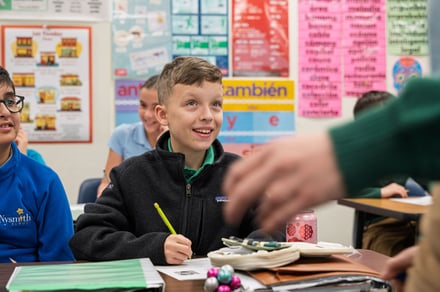 Spanish Begins in Fourth Grade
We begin with French and transition to Spanish in fourth grade because we want the study of language to remain fresh and engaging. Even the most interesting subject can begin to feel repetitive when a child studies it in exactly the same way for eight consecutive years. Introducing a new language renews the children’s curiosity while allowing them to apply much of what they have already learned.
Because French and Spanish are both Romance languages, students recognize familiar vocabulary, sentence patterns, and grammatical concepts. Spanish is similar enough to build upon their French experience but different enough to provide a new and stimulating challenge. During fourth and fifth grades, students begin exploring Spanish sentence structure and verb conjugation in greater depth, supported by the language-learning skills they developed during their earlier years.
Latin Begins in Sixth Grade
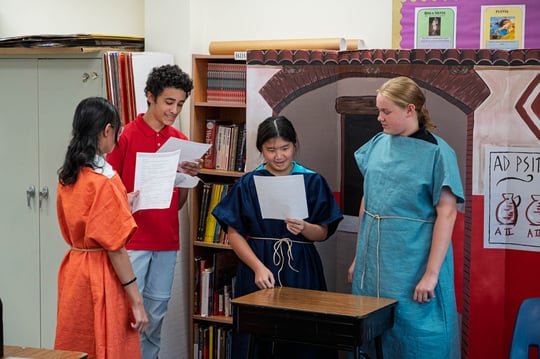
Students transition to Latin in sixth grade. Once again, they discover connections to the French and Spanish they have already studied. Latin also allows them to examine many of the roots that appear throughout English vocabulary. This strengthens not only their understanding of language but also their ability to interpret unfamiliar words in literature, history, science, and other academic subjects.
Latin has an unfortunate reputation for being dry or overly focused on memorization. That is not how we approach it at Nysmith. Our teachers present Latin as a living language and make lessons active, hands-on, and engaging. Students experience the language within its historical and cultural context, helping them understand why it remains relevant today.
 Preparing for High School Language Credit
This progression prepares students to choose either Spanish or Latin in seventh and eighth grade and to earn high school foreign language credit. Many Nysmith graduates who continue in public high school are prepared to enter the third year of their chosen language. Students attending especially rigorous private high schools may determine that entering the second year is the most appropriate placement. In either case, they begin high school with a strong foundation and considerable confidence.
Balancing Language Study with the Rest of the Curriculum
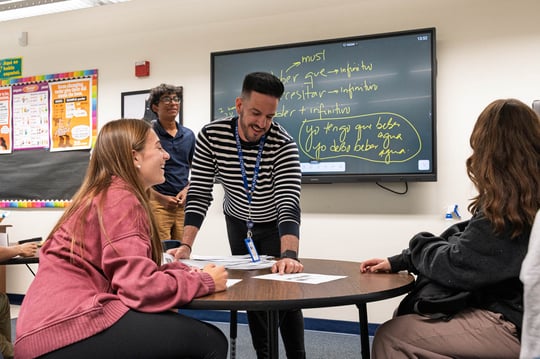
Another important consideration is balance. We want children to receive an excellent foreign language education without allowing one subject to consume the time and energy needed for all the other opportunities available to them. Because the foundation is developed gradually over many years, students can complete a high school level language course at Nysmith with approximately 15 minutes of homework per night. A student beginning the same level of study without that foundation might require considerably more time.
Could we pursue complete fluency in a single language? Certainly, but doing so would require a far greater commitment of time both during and after school. That commitment could come at the expense of mathematics, science, technology, the arts, athletics, friendships, family time, and the many other experiences that contribute to a rich childhood.
The Goal
Our goal is to give students a broad, meaningful, and joyful introduction to language. By progressing from French to Spanish to Latin, we keep the experience stimulating, help students recognize connections among languages, strengthen their English vocabulary, and prepare them for advanced study. Most importantly, we help children see themselves as capable and enthusiastic language learners.