
Here is what a typical kindergarten schedule looks like at Nysmith, from the first greeting at the car door to the final bell. Below, you’ll find how much time each subject receives, a sample daily routine, and a closer look at the curriculum. 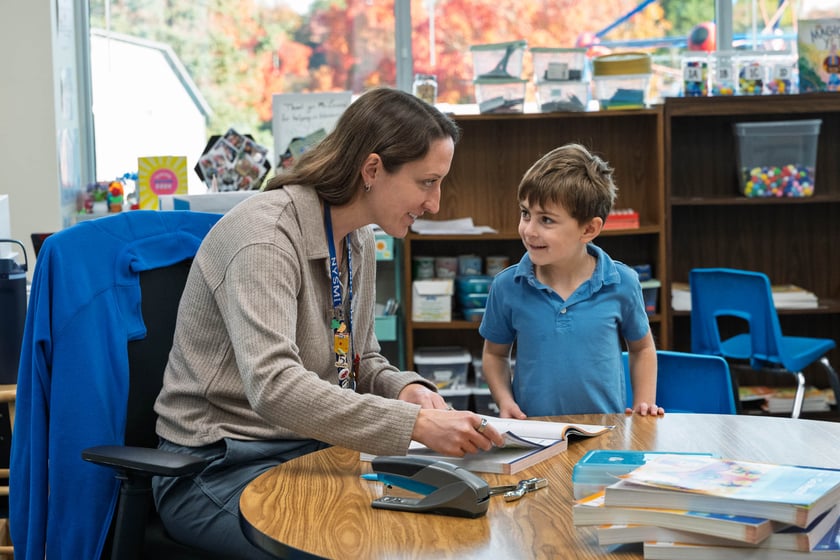
The day begins with one of the things I most enjoy about Nysmith: watching the children arrive each morning. There is certainly a steady flow of cars, but what stands out is the warmth. Eight members of our staff greet the children, open their car doors, and welcome them by name. Staff members help families cross safely from the admissions parking lot, and inside the building, our admissions team and administrators offer another familiar smile. Before the first class even begins, we want your child to feel that they belong.
How Our Kindergarten Day Is Structured
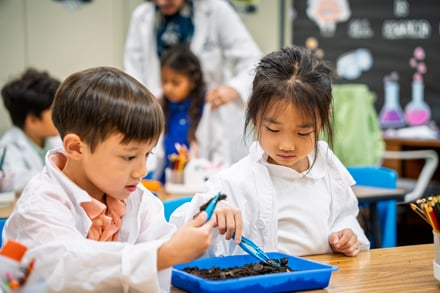
Our private kindergarten program has four sections, and each follows the same structure with the same teachers, although the order of classes varies. Throughout the day, children move from classroom to classroom, learning from teachers who specialize in the subjects they love. That enthusiasm is contagious. A teacher who is excited about science, reading, or history has a wonderful opportunity to help a child become excited about it, too.
Kindergarten Schedule at a Glance
Here is how much time each subject receives in a typical day. Because the order of classes varies from one section to the next, this table shows daily time per subject, not clock times.

|
Subject |
Daily time |
What it looks like |
|
Math |
1 hour |
Four segments of about 15 minutes, combining work with a teacher and independent activities suited to each child's readiness |
|
Language arts |
1 hour 15 minutes |
Activities change about every 15 to 20 minutes across reading, writing, spelling, and comprehension |
|
Science |
45 minutes |
Earth science, space science, chemistry, and biology, with experiments, hands-on labs, and projects |
|
Social studies |
45 minutes |
Ancient, American, and world history, plus four or five countries or cultures |
|
Technology |
30 minutes |
Coding, robotics, and communicating ideas through different programs |
|
Logic |
15 minutes |
Analytical thinking and creative problem solving |
|
French |
30 minutes |
Conversational, semi-immersion approach |
|
Daily special |
30 minutes |
Rotates among physical education, music, and character education and communication |
|
Lunch and recess |
45 minutes |
Eating, socializing, and playing |
**Note: This is a sample Kindergarten Schedule, the order of classes varies**
 Learning Through Exploration: Our Kindergarten Curriculum
This is an overview of a typical day. For the full kindergarten curriculum, visit our Kindergarten program page.
Math
Your child might begin with an hour of math. An hour can sound like a long time for a kindergartner, but the children are not sitting through an hour of the same activity. We divide that time into approximately four fifteen-minute segments, combining work with a teacher and independent activities suited to each child's readiness. Teachers learn what a child understands, introduce the next concept they are ready to explore, and give them opportunities to practice in interesting ways.
The goal is to keep learning fresh and engaging. Some children are developing their understanding of numbers, while others are ready for multiplication. There is a tremendous range in between, and we want to meet each child where they are. Being in kindergarten should not mean waiting to learn something you are ready to understand.
Reading and Language Arts
Reading and language arts receive an hour and fifteen minutes, again with activities changing approximately every fifteen to twenty minutes. This is where small classes and two teachers in each classroom make an extraordinary difference. A child's reading, writing, spelling, and comprehension do not necessarily develop at the same pace. A child may read confidently but need more support with writing. Another may understand a story at a level beyond what they can yet read independently.
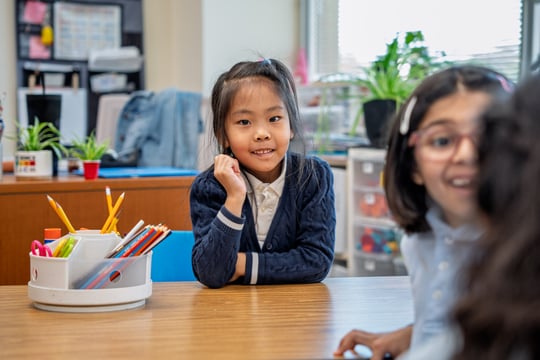
Within a classroom, that can mean:
- Reading: three main levels, or as many as eight
- Comprehension: a span of several grade levels
- Spelling: four to six different groupings
That is simply the reality of children's development. We all have different strengths, and our program gives teachers the flexibility to respond to those differences.
These groups are fluid. As children gain confidence and develop new skills, their needs change. Some are initially hesitant to show what they know, particularly when they are visiting an unfamiliar classroom. Our teachers understand that. Finding the right level is an ongoing process, supported by relationships, observation, and encouragement.
Science
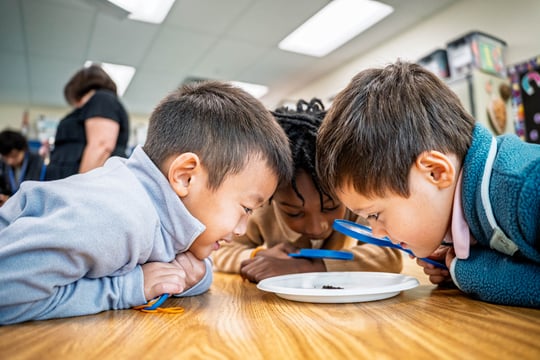
Every kindergartner also has forty-five minutes of science each day. The program includes earth science, space science, chemistry, and biology, with plenty of experiments, hands-on labs, and projects. Young children are naturally curious. They want to know what happens, why it happens, and what might happen if they try something differently. Science gives that curiosity a place to grow.
Social Studies
Social studies receives forty-five minutes. Even in kindergarten, children explore ancient history, American history, and world history through activities that help bring the past to life. They also study four or five countries or cultures, learning about their geography, history, and development.
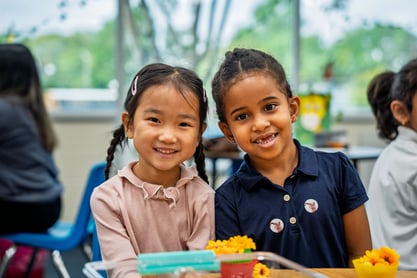
This has particular meaning in a community with families representing approximately sixty-five countries. Learning about other cultures helps children understand the people around them and appreciate perspectives beyond their own. As the world becomes increasingly connected, that understanding is an important part of their education.
Technology
Technology is part of the day as well, with thirty minutes devoted to coding, robotics, and learning to communicate ideas through different programs. We connect this work to other subjects whenever possible. A culture unit in social studies, for example, might become an opportunity to create a presentation using photographs, graphics, and information the children have learned. Technology becomes a tool for thinking, creating, and sharing.
Logic
Kindergarten also includes a fifteen-minute logic class focused on analytical thinking and creative problem solving. Children practice considering different solutions, recognizing patterns, and looking beyond the first answer that comes to mind. Those habits extend throughout the curriculum. We want children to become comfortable asking questions, analyzing possibilities, and trying another approach when something does not work.
French
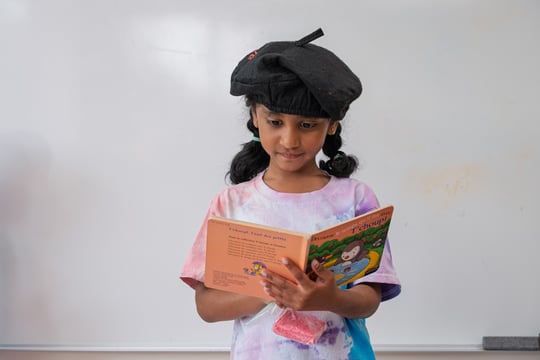
Each day also includes thirty minutes of French. Our conversational, semi-immersion approach builds vocabulary while helping children enjoy the experience of learning another language. Art, projects, and engaging activities give them opportunities to use what they are learning. At this age, nurturing the desire and confidence to communicate is an important part of the process.
More Than Academics: Building Friendships and Confidence
A well-rounded kindergarten experience includes much more than academics. Each day, students enjoy a rotating special in physical education, music, or character education. They also have opportunities to build friendships, develop social skills, and discover new interests.
- Physical education. Children develop motor skills and explore different sports. We want them to discover activities they enjoy while learning how to participate, cooperate, and build confidence in their abilities.
- Music. Children sing, play percussion instruments, and learn to read and write music. Kindergarten students have several performances throughout the year, giving them opportunities to become comfortable sharing their work with an audience. Our orchestra and band programs begin in third grade, but the foundations of musical enjoyment and confidence begin much earlier.
- Character education and communication. Children explore their feelings and understand the feelings of others. In kindergarten, that includes very practical questions: How do you make a friend? How do you keep a friend? What does it mean to treat someone kindly? Why does collaboration matter?
- Extracurricular activities: Beyond the classroom, students have opportunities to explore new interests, develop skills, and connect with friends through a variety of clubs and after-school enrichment programs.
The value of those lessons extends well beyond the scheduled class. With two teachers in each classroom, we have opportunities to help children apply the social and emotional skills they have learned when a real situation arises. A disagreement, a misunderstanding, or a chance to include someone becomes a teaching moment. Children need both the language to understand those experiences and the support to practice responding thoughtfully.
Small Classes, Two Teachers, and Time to Connect
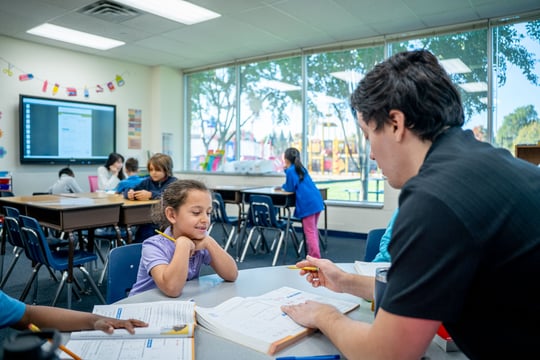
Great teachers enter education because they love connecting with children. Small classes, two teachers in each classroom, and a 9:1 student-to-teacher ratio give our teachers time to build those connections. They can learn what interests a child, what motivates them, and where a little encouragement might make a difference. That knowledge helps them bring the curriculum to life for each student.
Visiting Our Kindergarten: What an Immersion Day Looks Like
For a child visiting Nysmith, that welcome is especially important. Our admissions team walks you and your child to the classroom, introduces you to the teachers, and connects your child with student escorts who will help them throughout the day. Those students offer something adults cannot quite replicate: a child's perspective on what it feels like to be here.
We describe a visit as an immersion day because your child becomes part of the class. They participate in the activities, meet the children, and experience the learning for themselves. It is perfectly natural to feel a little anxious. Most adults feel the same way on their first day at a new job. What is lovely to see is how quickly that uncertainty often gives way to comfort. Many visiting children describe the experience as "finding their people." For a parent wondering whether a school is the right fit, that feeling means a great deal.
Before a visit, my best advice is to tell your child to have fun. We do not expect visiting children to know material they have not yet learned. We want them to arrive with an open mind, participate, and enjoy the experience. Our students enjoy welcoming visitors and making new friends, and our teachers enjoy getting to know them.
A Community for Parents, Too
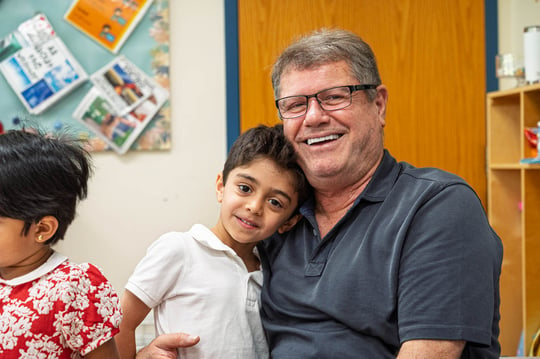
The sense of belonging at Nysmith extends to parents, too. Parents are welcome to walk their children into school, exchange a brief greeting with teachers, and see the classmates their children talk about at home. Throughout the year, families can also connect through school events, class gatherings, and PTO activities. From movie nights to special theme days, these experiences help build friendships and strengthen our school community.
How a Child Feels About School Matters
After forty years in education, I continue to believe that how a child feels about school matters enormously. When children feel comfortable, supported, and known, they are more willing to ask questions, attempt something unfamiliar, and share their ideas. That is the environment we work to create every day.
It is a full day, yet children often tell us it feels surprisingly short. Moving between classrooms and activities keeps learning fresh and engaging, with something new to discover throughout the day. Whether just beginning to read or ready for more advanced learning in kindergarten, we want every child to feel challenged and experience the satisfaction of learning something new.
One child described Nysmith as going to a birthday party every day. I have always loved that description. It captures the sense of excitement and anticipation we hope children feel about coming to school.
Kindergarten at Nysmith is a year of discovery, friendship, and growing confidence. We want children to learn a great deal, and we want them to enjoy the process. Most of all, we want your child to leave school eager to tell you what happened that day and excited to come back tomorrow.
See Our Kindergarten in Action
The best way to understand our kindergarten schedule and daily routine is to spend a day in the classroom. Schedule a tour or learn more about our Kindergarten program.